
USB-C Is Reshaping the Classroom. Is Your Audio Solution Ready?
What Schools Need to Know Before Purchasing Classroom Headsets
It is the first morning of state testing.
Students are logged in. The room is quiet. Proctors are watching the clock.
A headset stops working.
In that moment, the price per unit no longer matters. Reliability does.
If you are a principal, IT director, or district decision-maker, you have likely experienced some version of this. A small piece of equipment creates a large disruption. Instructional time is lost. Stress rises. Replacement orders begin again.
Classroom headsets seem like a simple purchase. Yet over time, they can quietly become one of the most repeated replacement items in a school’s technology budget.
Let’s take a closer look at what that really means.
The Hidden Math Behind “Low Cost” Headsets
At first glance, a $7 to $10 consumer headset feels like a responsible financial decision. When you are equipping 25, 40, or even thousands of students, the upfront savings appear significant.
But classrooms are not living rooms.
In daily K–12 environments, budget consumer headsets typically last 3 to 6 months. Headbands crack. Cords fray. Audio cuts in and out. Ear cushions flatten. Multiply that across a school year, and replacement cycles begin to stack up.
For a 40-student classroom:
- $7 per unit × 40 students = $280 initial purchase
- Average lifespan: approximately 4 months
- Replaced about 6 times over 2 years
- Total 2-year cost: approximately $1,680
Now compare that to professional education-grade models:
- $13 per unit × 40 students = $520
- Average lifespan: 2 or more years
- Warranty included on select models
- Total 2-year cost: approximately $520
That is a difference of more than $1,100 in one classroom.
And that does not include teacher time spent submitting replacement requests, IT tickets logged during testing season, or emergency purchases when units fail mid-assessment.
Pause and consider:
How many headset replacement orders did your school process last year?
Why Classrooms Are Tougher Than Consumer Environments
Consumer headsets are typically designed for occasional home use. A few hours a week. Minimal handling. Careful storage.
Classrooms are different.
In a typical K–12 setting, devices are:
- Adjusted repeatedly by different students
- Twisted and pulled during transitions
- Dropped from desks
- Stored quickly between periods
- Used by younger students who may chew cords or bend microphones
With 25 to 35 students in a room, equipment experiences constant handling. Even well-managed classrooms place consistent physical stress on devices.
The five most common failure points reported by educators include:
- Snapped headbands
- Frayed or exposed wiring
- Bent audio jacks
- Detached ear cups
- Microphones breaking at pivot points
When headsets are not engineered for this level of use, breakage is predictable.
Think Long-Term, Not Per Unit
It is easy to evaluate headsets based on unit price alone. It is harder, but far more valuable, to evaluate them based on total cost of ownership.
When you choose a headset for daily classroom use, you are not simply purchasing audio equipment. You are investing in:
- Instructional continuity
- Testing reliability
- Student safety
- IT efficiency
- Budget predictability
If headsets are used once per week or less, budget models may serve the purpose. But if students rely on them daily for literacy programs, language labs, video submissions, ESL instruction, STEM coursework, or state testing, durability and compliance quickly become critical.
In high-use environments, education-grade headsets consistently deliver three times the long-term value.
What Professional Education Headsets Are Designed to Do
Education models are engineered specifically for K–12 conditions. That includes:
- Reinforced headband construction for repeated daily adjustments
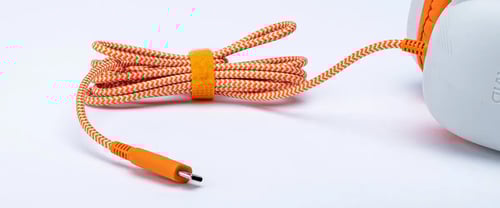
- Chew-resistant braided cords in most models
- Plastics formulated without toxic chemicals
- Microphones optimized for speech clarity
- Connectors compatible with Chromebooks, laptops, tablets, USB-C, USB-A, and 3.5 mm devices
- Models designed to meet TELPAS and most state testing requirements
Instead of being built for occasional entertainment, these headsets are designed for daily instructional performance.
And during testing season, that difference matters.
Why Testing Season Changes Everything
Testing windows do not leave room for uncertainty.
When headsets fail during state assessments, the impact goes beyond inconvenience. It affects scheduling, staffing, student focus, and in some cases, compliance requirements.
Many low-cost consumer headsets do not clearly document:
- Microphone sensitivity specifications
- Noise-canceling performance
- Compatibility with state testing platforms
- Assessment-specific audio standards
Schools often discover this too late, during spring testing preparation.
Professional education headsets are built with these requirements in mind. Models such as the AE-36, AE-55, and AE-79 are widely used in testing environments nationwide and are designed to meet strict K–12 assessment standards, including TELPAS, NWEA, CAASPP, and more.
When you plan ahead with compliant equipment, your testing window becomes predictable instead of stressful.
Ask yourself:
Does your current headset model clearly document assessment compatibility?
If not, that uncertainty may resurface during your busiest weeks of the year.
Safety in Elementary Classrooms Is Not Optional
For younger students, safety features matter just as much as durability.
In elementary environments, students handle equipment frequently. Cords are twisted. Microphones are repositioned. Devices may end up in backpacks or on the floor.
Many consumer headsets do not disclose material testing, contaminant screening, or volume-limiting standards.
Education-grade headsets should include:
- Global safety certifications such as CE
- Plastics tested for classroom safety
- Volume-limiting features, such as 85 dB maximum output for younger students
- Reinforced cords that resist fraying and chewing
When you select equipment for grades K–5, you are not just evaluating sound quality. You are evaluating material safety and responsible device standards.
For principals and district leaders, this is also a risk management consideration.
Sustainability and Responsible Resource Management
Broken headsets are rarely recycled. Most end up in landfills, contributing to growing electronic waste.
When devices are replaced every few months, the environmental impact compounds quickly.
Professional education brands increasingly provide structured recycling programs. Through partnerships with certified electronics recyclers, schools can return broken headsets at no cost and ensure materials are processed responsibly.
This is not just an operational decision. It is a values decision.
Sustainability teaches students long-term responsibility, thoughtful purchasing, and stewardship of resources.
When equipment lasts longer and has a recycling pathway, your purchasing strategy aligns with your educational mission.
The Leadership Perspective: What You Are Really Buying
When districts evaluate headsets solely by price per unit, the conversation stays small.
When you evaluate by instructional impact, the conversation changes.
You are investing in:
- Fewer classroom disruptions
- Fewer emergency purchase orders
- Reduced IT workload
- More predictable testing windows
- Increased teacher confidence
- Stronger student focus
Reliable classroom tools create calm. Calm creates better learning conditions.
And during testing season, calm protects your entire campus.
When Budget Options Make Sense
There are scenarios where low-cost headsets are appropriate:
- Computer labs used once per week
- Temporary pilot programs
- Backup sets for rare failures
- Short-term instructional trials
For limited, infrequent use, budget models may serve their purpose.
However, if students rely on headsets multiple times per week, or if they are required for state assessments, the long-term cost and operational risk often outweigh the initial savings.
A Quick Decision Guide
Budget models may work if:
- Usage is occasional
- No testing compliance is required
- Replacement cycles are manageable
- The need is short-term
Professional education models are recommended if:
- Headsets are used daily
- State testing requires audio compliance
- Students are elementary age
- IT resources are limited
- Replacement cycles have become frequent
If your school is replacing headsets more than once per year, it may be time to reevaluate your approach.
Final Thoughts
Classroom headsets are small devices. Their impact is not small.
They influence:
- How students participate in literacy programs
- How English learners complete assessments
- How teachers manage instructional time
- How confidently schools enter testing season
When equipment works consistently, no one notices.
When it fails, everyone does.
Before placing your next headset order, review your two-year replacement history. Consider the total cost of ownership, not just the initial invoice.
If you are planning for the upcoming school year or preparing for testing windows, connect with your school’s approved reseller to compare education-grade models and evaluate long-term value.
Your students deserve tools that work every time they log in.